Interface administrators, Administrators (Semantic MediaWiki), Curators (Semantic MediaWiki), Editors (Semantic MediaWiki), Suppressors, Administrators, trusted
13,279
edits
mNo edit summary |
mNo edit summary |
||
| Line 38: | Line 38: | ||
You will oblige me very much if you can publish this and remove my difficulties. | You will oblige me very much if you can publish this and remove my difficulties. | ||
{{Style P- | {{Style P-No indent|{{Style S-Small capitals|Negapatam,}}}} | ||
{{Style P-No indent|''July'' 14''th'', 1883.}} | {{Style P-No indent|''July'' 14''th'', 1883.}} | ||
{{Vertical space|}}}} | {{Vertical space|}}}} | ||
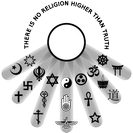
{{Style | {{Style S-Small capitals|Editor's Note}}.—To the rather impertinent (No. 5) question of our Negapatam inquisitive correspondent, we answer: The “moral standard of the ''Theosophists''” is—{{Style S-Small capitals||Truth}}—and this covers all. Whether those who believe in a personal, or anthropomorphic deity, or those who call themselves Agnostics, or Atheists, or Buddhists or even Materialists, once that they have joined the Theosophical Society, they are bound to present to the world a far higher “standard of morality” than that which is developed merely through fear of hell or any other future punishment. The love of virtue for its own sake does not seem to enter in, or agitate the centres of our correspondent’s reflective faculties. If he would know more of theosophy and its ethics, we would refer him to the ''Rules of the Theosophical Society, its Objects and Principles.'' | ||
{{Footnotes}} | {{Footnotes}} | ||